
May 18, 2026
Ageing in Place technology in Australia: from feature set to operating layer
Australia's retirement village model is being asked to do something it was never designed for. Residents are staying longer, with more complex needs, and they have nowhere else to go. Independent living is becoming integrated care - and the regulation, staffing and infrastructure has not caught up.
The question facing operators is no longer whether to invest in Ageing in Place technology. It is what that technology actually has to do now to hold the new operating model together.
What we heard at the table
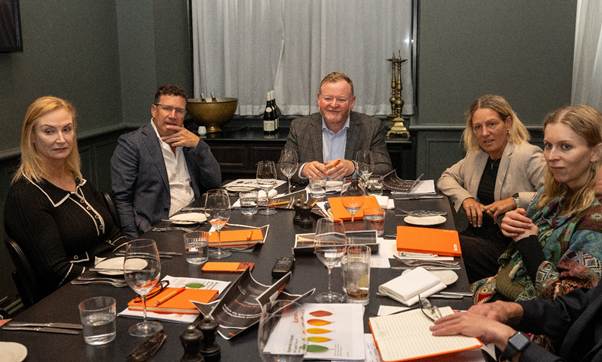
Last month we hosted a DCM Group lunch in Melbourne with CEOs from Keyton, mecwacare, Levande and Silverchain, plus former Federal Health Minister Greg Hunt. The full conversation was published in The Weekly Source.
The room agreed on three things.
First, the model has changed shape. Keyton CEO Nathan Cockerill put it directly: operators can no longer be pure-play retirement living businesses hoping the model that worked ten years ago will work in five years' time. People are staying longer, often with care needs the village was never designed to deliver.
Second, the pressure is structural, not cyclical. Residential aged care is full. Hospitals can't safely discharge older patients. Home care keeps people at home until crisis. Retirement villages have become the default holding pattern for an entire system under capacity stress.
Third - and this is the consensus point that matters most for what we build - technology is no longer optional in this conversation. It is the operating layer that decides whether the new model holds. Greg Hunt's line landed it cleanly at the lunch: we will not be able to meet the care needs of an ageing population without AI and robotics.
What Ageing in Place technology now has to do
From the lunch conversation, from our deployments, and from five years building specifically for this shift, four operational requirements have become clear.
Daily visibility, not crisis visibility
Operators need to know where their residents are at every day - not just at the point of escalation. Activity patterns. Communication frequency. Wellbeing signals. The data that turns a reactive care model into a preventative one, and gives care staff something better than a crisis-driven workflow.
One platform, not five
Emergency duress, resident communication, smart home control, telehealth, family connection, care coordination. Most villages run these as separate vendor relationships, with separate devices in the home, separate dashboards, and separate support contracts. That model breaks at scale. The platform has to consolidate.
Integration with home care, not replacement of it
61% of villages now offer home care. Only 17% of village units actually receive it, according to the Property Council's December 2025 report with Ansell Strategic. The gap is a coordination problem, not a delivery one. Ageing in Place technology has to integrate with the operator's chosen home care provider - Silverchain, the operator's own team, or anyone else - not compete with them.
Compliance as a by-product of operations
The Victorian Retirement Villages Amendment Act 2025 commenced 1 May 2026. NSW followed in September 2025. The new Aged Care Act 2024 creates a Commonwealth duty on providers to act consistently with residents' rights to make decisions about how they live, including where there is some personal risk. The platform has to produce the audit trail by default, not as a separate workstream operators have to staff.
Where Lumin fits
This is what we have built. Lumin CareHub is the purpose-built platform we designed for the full arc of Ageing in Place - hardware, cloud, applications and an AI foundation, engineered together. Deployed across retirement villages and home care providers in Australia and New Zealand. An Australian Good Design Award winner for Excellence in Design and Innovation.
We trialled gait analysis across three villages last month. 70% of residents opted in - not because we marketed it to them, but because they recognised what it gave them: the ability to keep living actively, longer. That's the conversation residents actually want to have, and it's the conversation the new operating model needs the technology to support.
We work alongside operators, government and peak bodies as the sector navigates the most significant structural shift in retirement living in two decades. Not as a vendor selling a feature set, but as infrastructure for the model the sector is now building.
See how Lumin CareHub fits your operating model
Book a conversation with Paul Wilson to explore how purpose-built Ageing in Place technology can become the operating layer for your village.
Book a DemoWhat this means for operators
The timeline has compressed. The Aged Care Act is live. The Victorian and NSW Acts are live. Support at Home funding is flowing. The operators who started this transition two years ago are now ahead of regulation. The operators who haven't started will be reacting to it.
The next 24 months will define which side of that line each operator sits on.
To explore how Lumin fits into your operating model, book a conversation with Paul Wilson or learn more about Lumin CareHub.
Subscribe for updates
Get new articles and insights from Lumin delivered to your inbox.