

For hospitals
The care they need. The independence they deserve.
Every unnecessary day in hospital costs your older patients something no clinical intervention can restore: their independence.
Older Australians make up 17% of the population but account for 44% of hospitalisations. Many stay longer than clinically necessary - not because they need acute care, but because the infrastructure to support them safely at home doesn't work for them. Hospital in the Home (HITH) and virtual ward programs can change that, but only if the communication infrastructure works for patients who aren't confident with technology.
Getting older patients home sooner - and keeping them there.
If your HITH or virtual ward program needs patient communication infrastructure that works for older, less digitally confident patients, we'd welcome the conversation.
The reality for older patients
The longer they stay, the less they come home to.
The geriatric literature has a term for it: iatrogenic disability - disability caused not by the illness, but by the care setting itself. Older adults spend the vast majority of their hospital stay immobile. Physical deconditioning and cognitive decline begin within days. For many, the acute problem gets treated, but a chronic one is created in the process.
Hospital in the Home and virtual ward programs can change this trajectory. The clinical evidence is strong - lower mortality, fewer readmissions, higher patient satisfaction. But the patients who stand to benefit most are the same patients current communication tools can't reach: those without a smartphone, those who can't navigate a portal, those whose dexterity or cognition makes a loaned tablet unusable.
If your HITH program can only serve digitally confident patients, it can't scale where it matters most.

~30%
of older adults experience lasting functional decline after hospitalisation - many never regain their previous independence
Day 2
Deconditioning and functional decline from baseline can begin by the second day of hospitalisation in older patients
~$2,800
Average cost per occupied bed day in Australian public acute hospitals (AIHW, 2022 - 23)
The operational questionThe clinical evidence for Hospital in the Home is well-established. The barrier to scaling is operational - reliable, low-friction communication between your clinical team and the patient at home, particularly for patients who aren't digitally confident.That's the gap Lumin is designed to close.
How Lumin helps
Patient communication infrastructure that works for every patient.
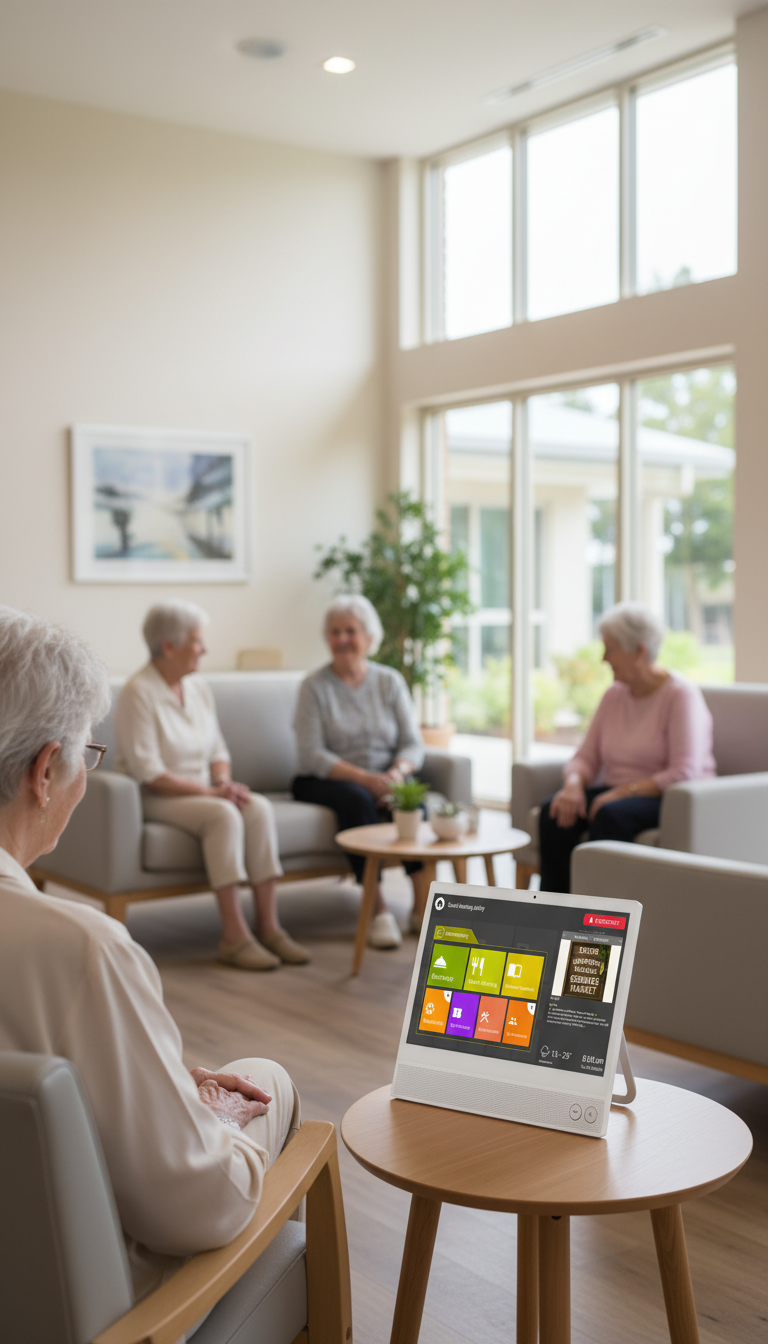
The Lumin CareHub is a managed 15.6" touchscreen deployed to a patient's home for the duration of their HITH episode - or longer. Already supporting thousands of older Australians and New Zealanders across aged care settings, it's built for exactly the cohort your program is trying to reach.

Clinician-initiated contact
Your team reaches the patient - not the other way around. Video calls connect without the patient needing to sign in, charge a device, or take any action.
Accessible to every patient
No passwords, no apps, no learning curve. Designed for people who aren't confident with technology. OneTouch interface available for patients with cognitive impairment.
Always connected
Triple connectivity - Ethernet, WiFi, and 4G - with automatic failover. Peripheral monitoring devices connect with real-time connection status reporting.
Zero hospital IT burden
Deployed, managed, monitored, updated, and recovered by Lumin. Nothing for your IT team to support, configure, or maintain.
The critical windows, covered
Medication reminders, appointment prompts, emergency duress with pendant, and family video calls - the infrastructure for the first 72 hours after discharge and the 30-day readmission risk window.
For your clinical team
Reach every patient, reliably
Clinician-initiated video calls that don't depend on patient digital confidence. Your team connects when they need to - the patient just answers.
Expand your eligible cohort
Patients previously excluded from HITH due to digital barriers become reachable. The same platform works for the 85-year-old with arthritis and the 70-year-old who's never used a tablet.
Fewer family enquiries
The free Supporters App keeps families informed with photos, messages, and alerts - reducing enquiry pressure on your clinical team.
For your patients
Connected to family from day one
One-touch video calls with family. No personal device needed. Connection that supports recovery and reduces the isolation that accelerates decline.
Safe at home
Emergency duress via integrated pendant. Medication reminders on screen. The safety infrastructure that makes home feel safe - for the patient and for the clinician responsible for them.
Independence preserved
Every day at home instead of in a ward is a day their independence is protected, not eroded. The Lumin CareHub makes that day possible for patients your current tools can't serve.
Works with your existing systems.
Lumin Connect integrates with clinical and operational platforms via API and supports health data protocols including HL7. The Lumin CareHub adds a patient-facing layer without disrupting the systems your teams already use.
See how it works for your HITH program.
We can brief your team on the platform, walk through the clinical communication workflow, and discuss what a deployment could look like.
In practice
Already deployed in a clinical setting.
The Lumin CareHub is deployed across aged care settings in Australia and New Zealand, supporting thousands of older people - the same cohort that moves through your wards. It has also been deployed in an acute hospital environment.
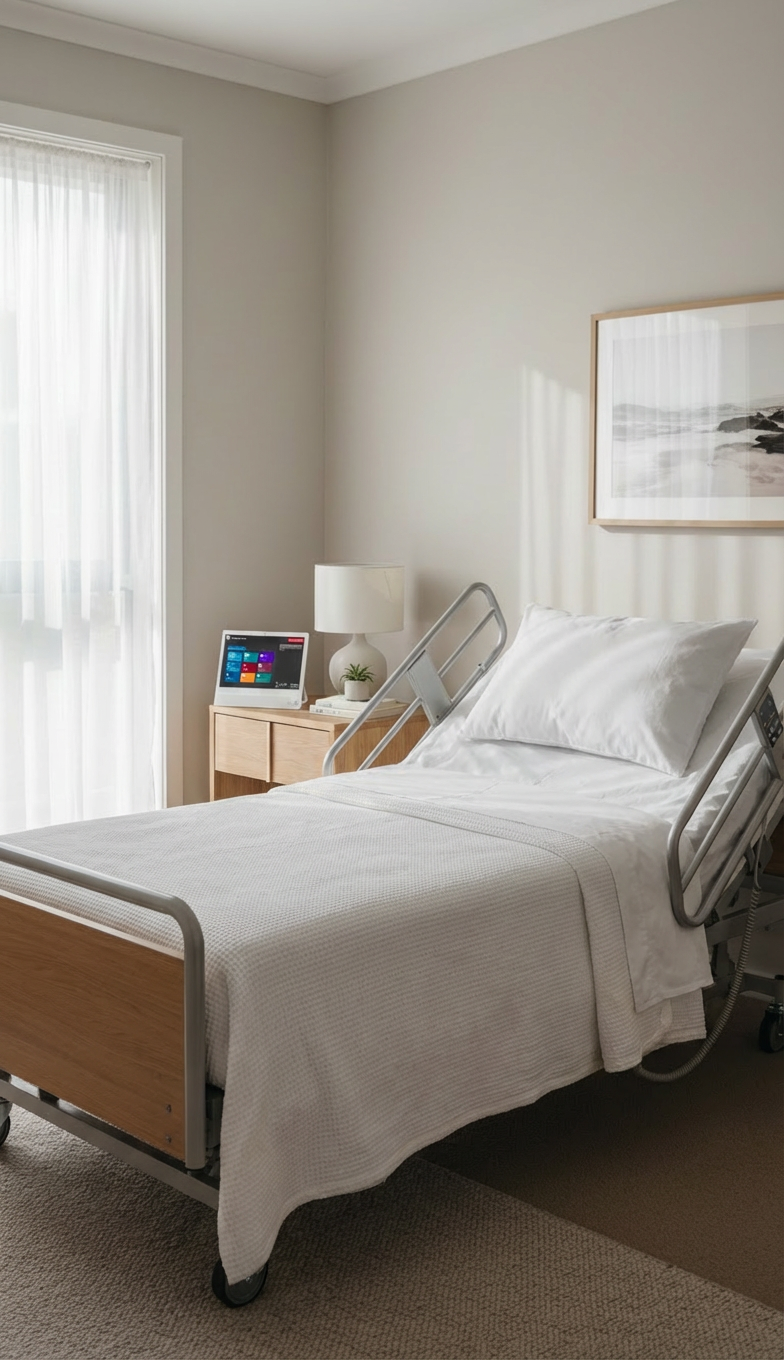
Bayside Health, Flinders Ward - Smart Ward Deployment
Lumin CareHubs deployed in Flinders Ward at Bayside Health (formerly Peninsula Health), providing managed patient communication, family connection, and entertainment infrastructure for patients who couldn't use personal devices. Centrally managed across multiple rooms without hospital IT resource.
Read the case studyInterested in a clinical deployment?
We're actively partnering with hospitals and virtual care programs to deploy CareHubs within HITH programs. If you're exploring patient communication infrastructure for older patients, let's design something together.
Discuss a DeploymentEvery unnecessary bed day costs your patient their independence. Let's change that.
We're working with hospitals and virtual care programs who share our commitment to helping older Australians and New Zealanders recover at home.